Specialty
Dark Realism
Cinematic shading, deep contrast, and meticulous detail. Dark realism turns concepts, portraits, and atmosphere into permanent skin photography.
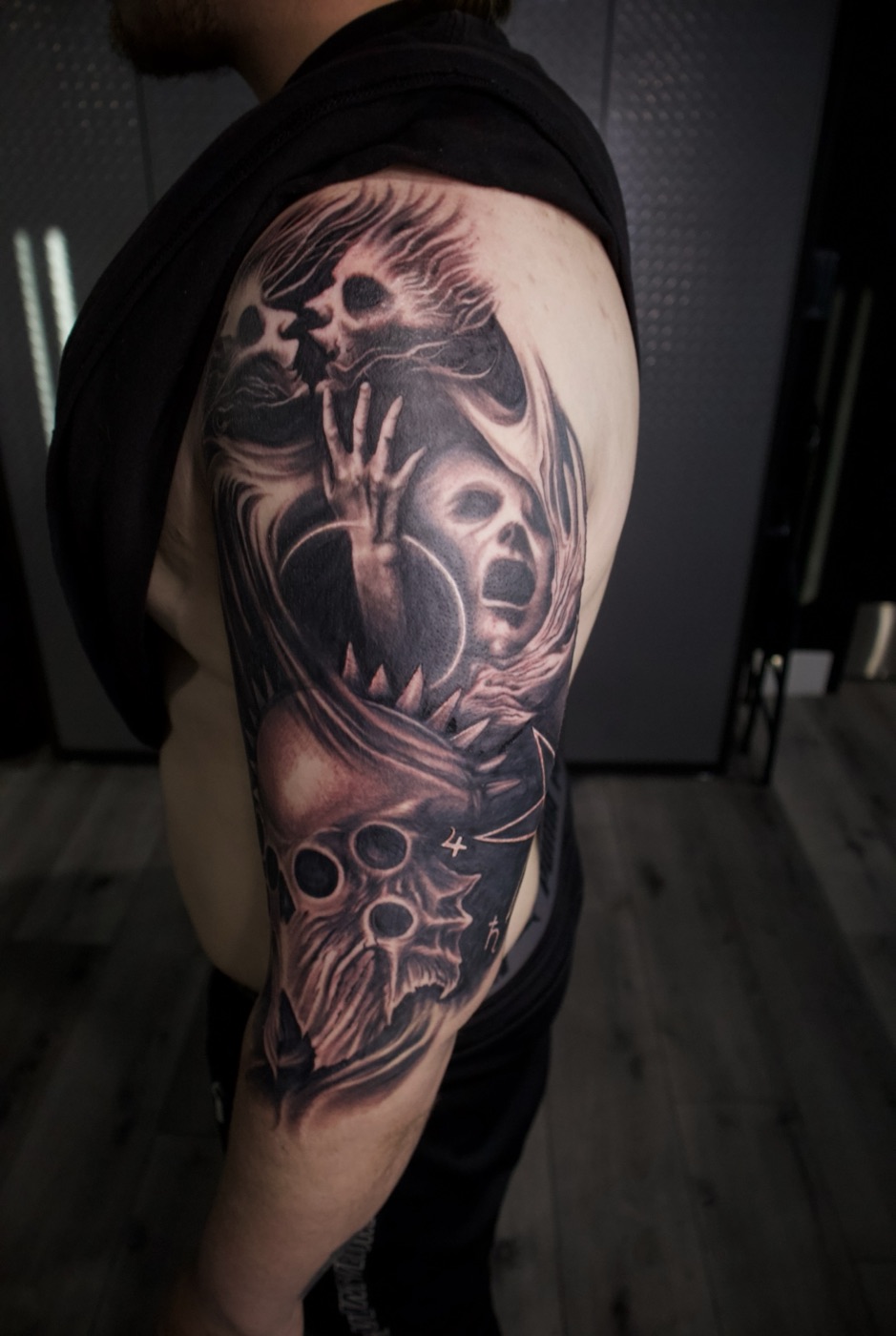
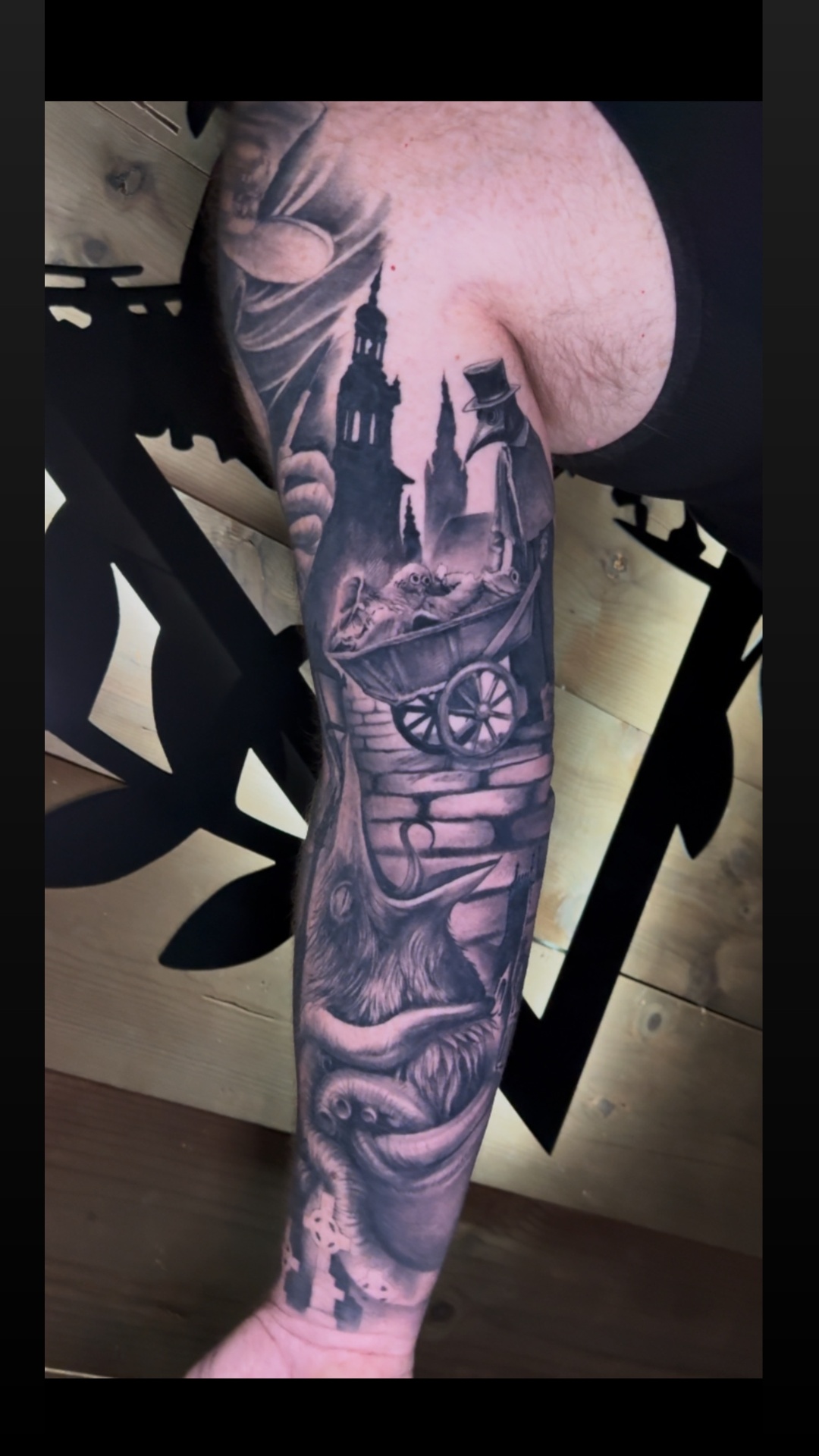
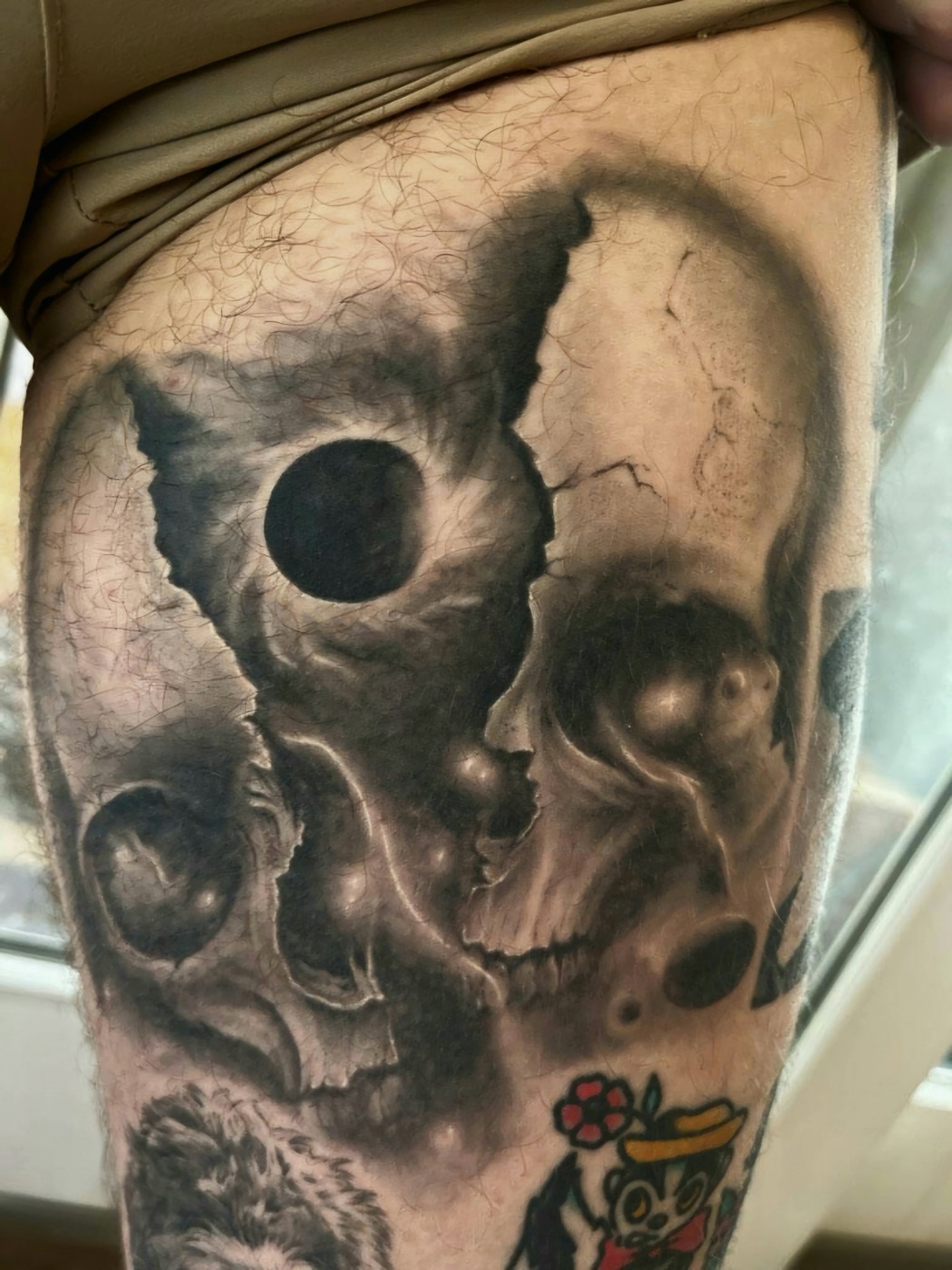
What Dark Realism Actually Is
Dark realism is realism with a point of view. It takes the technical foundation of black & grey portraiture, accurate anatomy, photographic light, believable texture, and pushes it into shadow: wraiths, skulls, plague doctors, gothic architecture, occult and religious iconography. The goal is not shock. The goal is atmosphere. A great dark realism piece reads like a still frame from a film you cannot stop thinking about.
How Gerald Builds a Piece
Every project starts with the concept, not the flash sheet. Gerald composes each piece for the specific body it will live on: where the muscle moves, how the limb turns, where light naturally falls on the skin. The design is built in layers of diluted black ink, the same way a charcoal drawing is built in values. Deep blacks anchor the composition. Mid greys carry the detail. Untouched skin becomes the highlight. That value discipline is what separates a piece that holds together at a distance from one that turns to mud in five years.
Subjects Gerald Gravitates Toward
Skulls and anatomical studies. Wraiths, reapers, and spectral figures. Plague doctors and gothic cityscapes. Religious and occult iconography, from Madonnas to pentacles. Mythological creatures and surrealist composites that merge several elements into a single haunting image. If your concept lives somewhere between beautiful and unsettling, it is probably a fit.
Why Black & Grey Ages Better
Black ink is the most stable pigment in tattooing. Color pigments fade at different rates and shift hue as they break down; black simply softens. A well-built black & grey piece keeps its structure for decades because the contrast is engineered into the design from the start. Dark realism in particular benefits from this: the style is built on shadow, so the natural softening of age deepens the mood instead of destroying the detail.
Sessions, Sizing, and Placement
Realism rewards size. Detail needs room to breathe, so most dark realism work starts at palm-sized and grows from there. Half sleeves, full sleeves, thighs, and chest panels are the natural canvases. Larger projects are built across multiple full-day sessions, typically spaced four to eight weeks apart so each layer heals fully before the next pass. Gerald works in focused one-on-one sittings of up to eight hours inside The Skull Museum in Shingle Springs.
Dark Realism — Common Questions
Ready to start?
Bring your concept and any reference imagery. Gerald will design a custom composition that suits your placement and body.
Request a Consultation